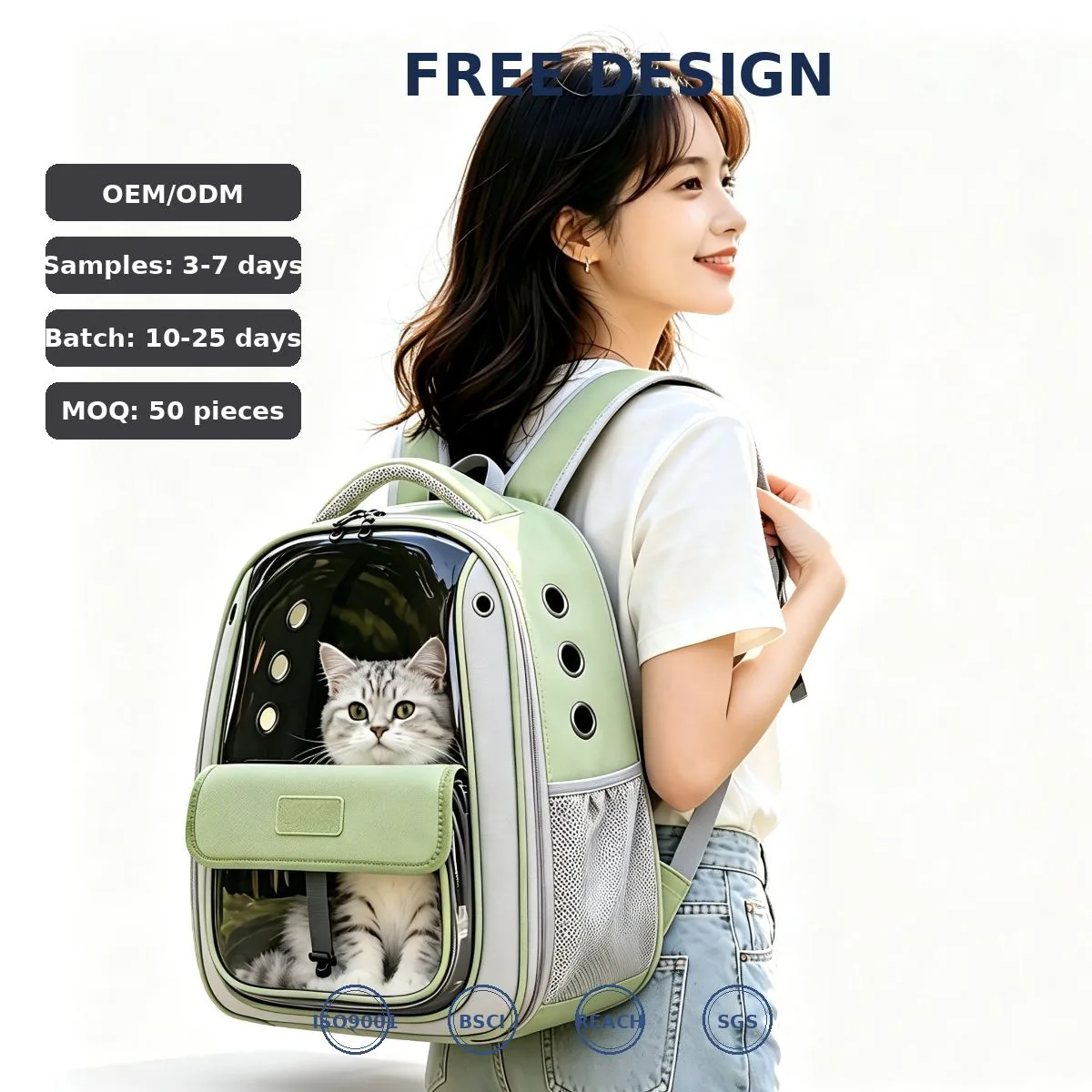
Short answer: Safe pet carriers need mesh ventilation on at least two sides, breathable fabric and shade from direct sun; overheating, not cold, is the real travel risk. BATELI PET builds ventilated carriers with MOQ from 50 pcs (OEM), 30-45 day production and BSCI, SGS, ISO, REACH and RoHS certified materials.
\n\n
\n\n
Heat kills more travel pets than cold does. A closed soft bag sitting in a parked car or near a sunny window can become dangerous within minutes, even when the weather feels mild. Ventilation is the single most important safety feature a buyer looks at, and the most common defect in cheap carriers is mesh that blocks too much airflow. For a brand, getting ventilation right prevents injury complaints and the reviews that follow. This guide explains how mesh density, airflow and temperature work together, and how to source a carrier that keeps pets cool. Start with our pet carrier materials guide.
\n\n
What Makes a Pet Carrier Properly Ventilated?
\n
A ventilated carrier has real openings on at least two sides, usually mesh windows on the front and top, plus breathable woven fabric. The mesh must be large enough for air to pass but small enough that claws cannot catch. A rigid base supports the pet while the body fabric lets air move. One small mesh window on a sealed bag is not enough; look for 360-degree airflow so there is always a fresh side regardless of how the bag is turned.
\n\n
How Does Mesh Density Affect Airflow?
\n
Mesh density is a trade-off. Tighter mesh blocks more dust and insects but reduces airflow; wider mesh improves cooling but offers less scratch protection. The sweet spot is a breathable woven mesh with a fine weave, reinforced at the edges where paws push. In hot climates, buyers want the wider mesh; in cold or dusty climates, a tighter weave plus a removable warm liner sells better. Ask the factory for a sample mesh swatch so you can compare airflow side by side before you commit. Construction details are in our hardware and accessories spec guide.
\n\n
| Condition | Ventilation need | Buyer advice |
|---|---|---|
| Warm weather / car | Maximum airflow | Wide mesh, shade |
| Airline cabin | Balanced | Two mesh sides, soft base |
| Cold weather | Insulation + vent | Removable liner |
| Direct sun | Shade first | Never leave in sun |
\n\n
How Does a Buyer Judge Ventilation Before They Buy?
\n
Look at the product photos closely. A listing that shows only the outside shape tells the buyer nothing about airflow. Trustworthy listings show the mesh close-up, the padded interior and the open zipper. Buyers should count the mesh panels and ask whether the fabric is breathable weave rather than solid plastic. As a brand, investing in those close-up photos reduces returns, because the customer already knows exactly how much air the bag lets through before it arrives.
\n\n
How Does Seasonal Design Improve Sales?
\n
The same carrier can sell twice a year if it is built for both. A breathable mesh version for summer and a zippered warm liner for winter give one SKU a longer selling window. Buyers in changing climates appreciate the liner option, and the brand avoids building two separate molds while extending the selling season for the same product. This is a small ODM change with a clear payback, and our team can design it into a single base model. We have run since 2003 at 2,600 m² with 18 lines and 80,000+ units per month.
\n\n
Why Is Overheating the Hidden Travel Risk?
\n
Dogs and cats cool themselves by panting, which works poorly inside a sealed bag. Even on a 22°C day, a closed carrier in direct sun can climb well above safe temperature in minutes. The rule for buyers is simple: never leave the carrier in a parked car, keep it in the shade, and offer water on trips over an hour. For the brand, listing these warnings on the product page is not just polite, it reduces the reviews that blame the bag for a scenario no product could fix.
\n\n
How Should a Brand Spec Ventilation for Its Market?
\n
Match the mesh to the climate you sell into. A Middle East or southern EU customer wants maximum airflow; a northern EU or UK buyer accepts a tighter weave with a warm liner. Specify the number and size of mesh panels, and request a temperature-resistant, breathable fabric. All our carriers use REACH and RoHS compliant materials, with BSCI, SGS and ISO certified production. MOQ starts at 50 pcs (OEM) / 100 pcs (ODM), logo samples in 3-5 days and production in 30-45 days. We have run since 2003 (20+ years) at 2,600 m², 18 lines and 80,000+ units monthly, serving 5,000+ customers in 30+ countries. Customize through custom manufacturing.
\n\n
What Safety Details Should the Listing Promise?
\n
Claim real safety features: reinforced mesh edges, a washable pad, a secure zipper and a leash tether. Do not claim the bag is “escape-proof” unless it has been tested, because that invites warranty claims. Show the mesh close-up in photos so buyers can judge airflow for themselves. Related reading: our guide to airline-approved size and safety.
\n\n
Good ventilation is also about calm pets. When air moves, the carrier feels less like a box and more like a shelter, which reduces stress on the first trip. That calmer experience shows up in reviews, and reviews drive the next sale.
\n\n
Frequently asked questions
\n
How many mesh panels should a safe carrier have?
\n
At least two, on different sides, so air flows through regardless of how the bag is turned. A single small window is not enough for warm weather.
\n
\n
Can a pet overheat inside a ventilated carrier?
\n
Yes, if it sits in direct sun or a parked car. Ventilation helps but shade and never leaving the bag unattended in heat are the real protections.
\n
\n
What is the MOQ for ventilated custom carriers?
\n
MOQ starts at 50 pcs for OEM logo customization and 100 pcs for ODM design, including custom mesh specifications.
\n
\n
How long does sampling and production take?
\n
Sampling 7-15 days by type, then 30-45 days for mass production after sample approval, with 80,000+ units per month capacity.
\n
\n
Are materials certified for export?
\n
Yes. The factory is BSCI, SGS and ISO certified, with REACH and RoHS compliant materials, exporting to 30+ countries.
\n
\n\n
Need a ventilated carrier range built for your climate? Request a Quote or Get a Free Sample. WhatsApp: +86 133 8657 5871 | Email: pet@batelipet.com
\n\n\n\n\n