Short answer: An airline-approved cat carrier must fit under the seat, measure roughly 40x25x25cm, and be soft-sided. BATELI PET OEMs IATA-aligned carriers from 50 pcs with 7-15 day sampling and 50+ country export experience.
Flying with a cat is stressful enough without the carrier failing at the gate. Airlines measure carriers, check them against IATA standards, and — on many flights — refuse pets that don’t fit the rules. Choosing the right airline-approved pet carriers cat carrier is the difference between a smooth trip and a missed flight. Here is what to look for, whether you are buying one carrier for your own cat or sourcing them wholesale for a retail business.
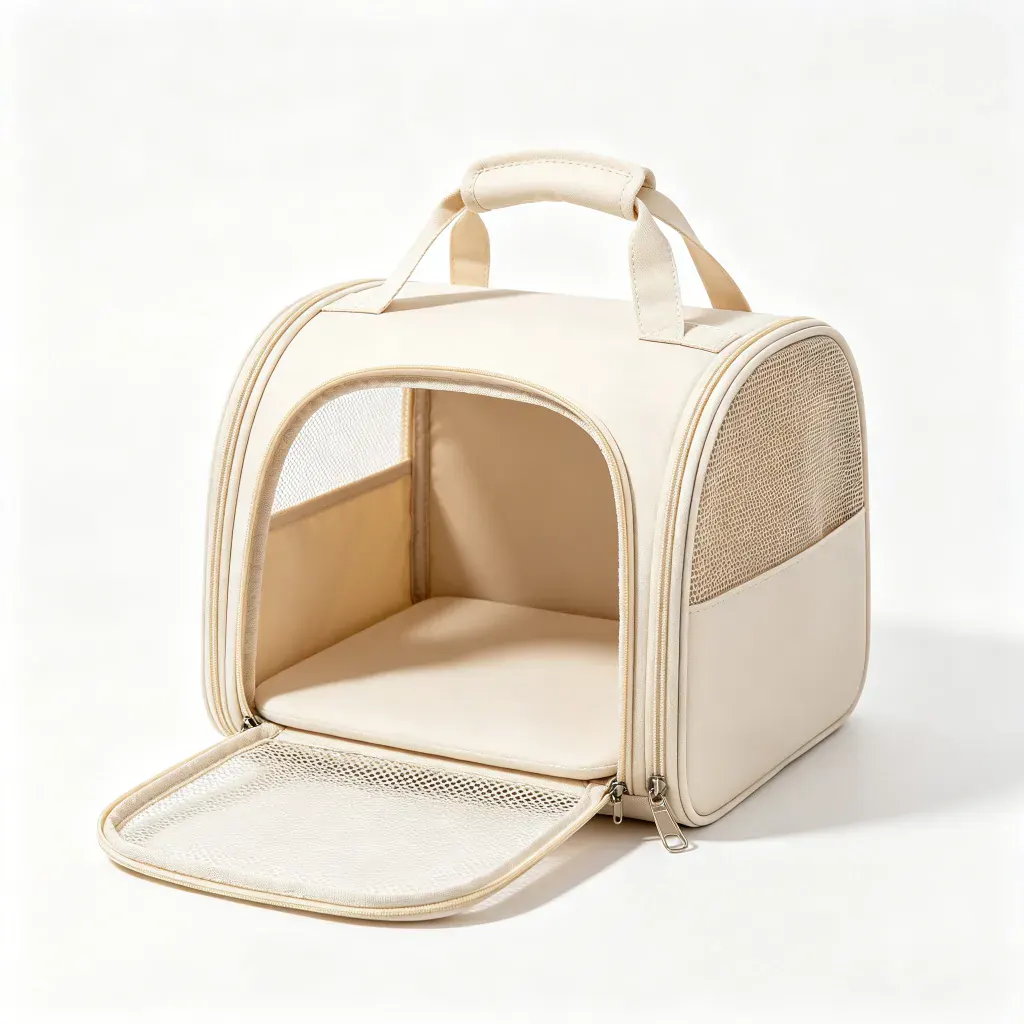
Know the Airline Rules Before You Buy
Every airline publishes its own pet travel policy, and the rules differ. Most carriers allow one pet per passenger in the cabin, with the pet in a carrier that fits under the seat in front of you. That means the carrier’s dimensions matter more than almost anything else.
The most common under-seat size limits fall in the range of roughly 45–55 cm long, 28–35 cm wide, and 25–28 cm tall — but always check the specific airline you plan to fly. Some low-cost carriers are stricter, and international flights can have different rules from domestic ones. The practical takeaway: buy a carrier that is soft-sided and slightly flexible, because soft walls give you a little margin when the gate agent measures it.
What Makes a Carrier Truly Airline-Ready
Not every carrier that says “travel” is actually airline-ready. For cabin travel, look for these features:
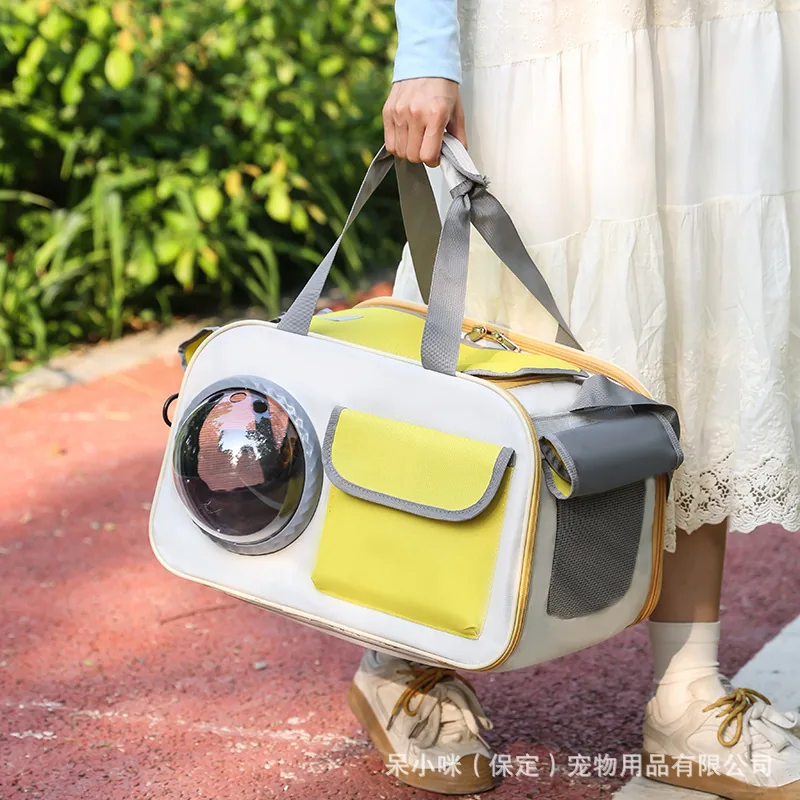
- Correct dimensions — soft-sided carriers that compress slightly are safer bets than rigid boxes
- IATA-compliant design — tested to common IATA under-seat dimensions, with compliance documentation from the manufacturer
- Breathable mesh panels — most of the carrier’s walls should be mesh so your cat has airflow
- Secure, anti-escape closures — double zippers and sturdy seams; a nervous cat is strong
- A leak-resistant base — accidents happen, and airlines will not accept a carrier that can soil the cabin
- Ventilation on at least two sides — air must flow even when the carrier is pushed under the seat
A good manufacturer will tell you exactly which models are airline-approved and can share dimension test information.
Size It for Your Cat, Not Just the Rules
The carrier must meet the airline’s size limits, but it must also give your cat room to stand, turn around, and lie down. An undersized carrier is both uncomfortable and a potential boarding problem, since airline staff may refuse a cat that is visibly cramped.
Measure your cat from nose to the base of the tail, and from the floor to the top of the head while standing. Compare those measurements against the carrier’s interior dimensions, not the exterior ones — thick padding and solid walls can shrink the usable space. When in doubt, size up within the airline’s limits.
Weight, Comfort, and Stress Reduction
A heavy carrier is miserable to carry through a long airport, so weight matters. Soft-sided carriers are typically lighter than hard-sided kennels, which is one reason they dominate cabin travel.
Your cat’s stress level is part of the equipment, too. Introduce the carrier at home a week before the flight: leave it open with a blanket inside, feed treats near it, and take short practice trips in the car. A cat that has learned to tolerate the carrier will be calmer at the airport. For the flight itself, add a familiar-smelling blanket, avoid feeding right before travel, and never sedate your cat unless a veterinarian recommends it — sedation can be dangerous at cabin altitude.
Where to Buy Quality Airline-Approved Carriers in Bulk
If you are sourcing airline-approved cat carriers for a retail business, a specialist manufacturer matters more than in most categories, because safety claims have to be real. Look for a factory that:
- Specializes in pet carriers rather than general bags
- Provides IATA dimension compliance information and test reports
- Offers soft-sided, mesh-walled models in the standard under-seat size range
- Supports private label, so the carrier carries your brand, not the factory’s
- Can supply a reasonable MOQ for testing the market before scaling
BATELI PET is a pet carrier manufacturer in Baigou, Hebei, China, with more than 20 years of production experience. Its airline-ready range is designed to IATA under-seat dimensions and tested for major US, EU, and Asian airlines, with compliance test reports available on request. Soft-sided mesh models come in the standard cabin size range, and every order is available for private label with your logo and packaging, from an MOQ of 50 pieces. For airlines and larger retail programs, the factory also runs airline-approved models at a 100-piece MOQ with test documentation.
Red Flags to Avoid
- No dimension data — a manufacturer that cannot state its carrier’s dimensions and airline compatibility is not protecting you
- Rigid boxes marketed as cabin carriers — they rarely flex enough to pass gate checks
- Cheap mesh with weak zippers — escapes happen exactly here
- “Airline approved” with no documentation — real compliance is backed by test reports
Fly With Confidence
The right carrier protects your cat, passes the airline’s checks, and keeps you calm through the whole journey. Start with the airline’s rules, choose a soft-sided, breathable, IATA-compliant model sized for your cat, and give your pet time to get used to it before travel day.
If you are sourcing airline-approved cat carriers wholesale for your store or brand, contact BATELI PET for a quotation, dimension data, and sample plan — our team responds within 24 hours. Request a Quote
Frequently Asked Questions
What are the size limits for an in-cabin cat carrier?
Most airlines require roughly 40x25x25cm under the seat; always check your airline. We size carriers to IATA guidance and provide verification.
Hard or soft carrier for a cat on a plane?
Soft-sided carriers are easier to squeeze under the seat and lighter. We OEM soft-sided designs from 50 pcs.
How fast can I get custom airline-approved samples?
Logo samples take 3-5 days, material samples 7-10 days, and ODM design samples 10-15 days, with production in 30-45 days.
Do you provide airline compliance documentation?
Yes. We supply size verification and REACH/RoHS reports, backed by BSCI, SGS and ISO 9001 certification.