Short answer: OEM means you provide the design and the factory manufactures it; ODM means the factory provides an existing design you customize (logo, color, features). BATELI PET offers both: OEM MOQ 100 units with 10-15 day custom sampling, ODM MOQ 50 units with 3-5 day logo sampling. Both include 30-45 day production, BSCI/SGS/ISO 9001 certified quality control, and export to 50+ countries from our 2,600m² Baigou factory.
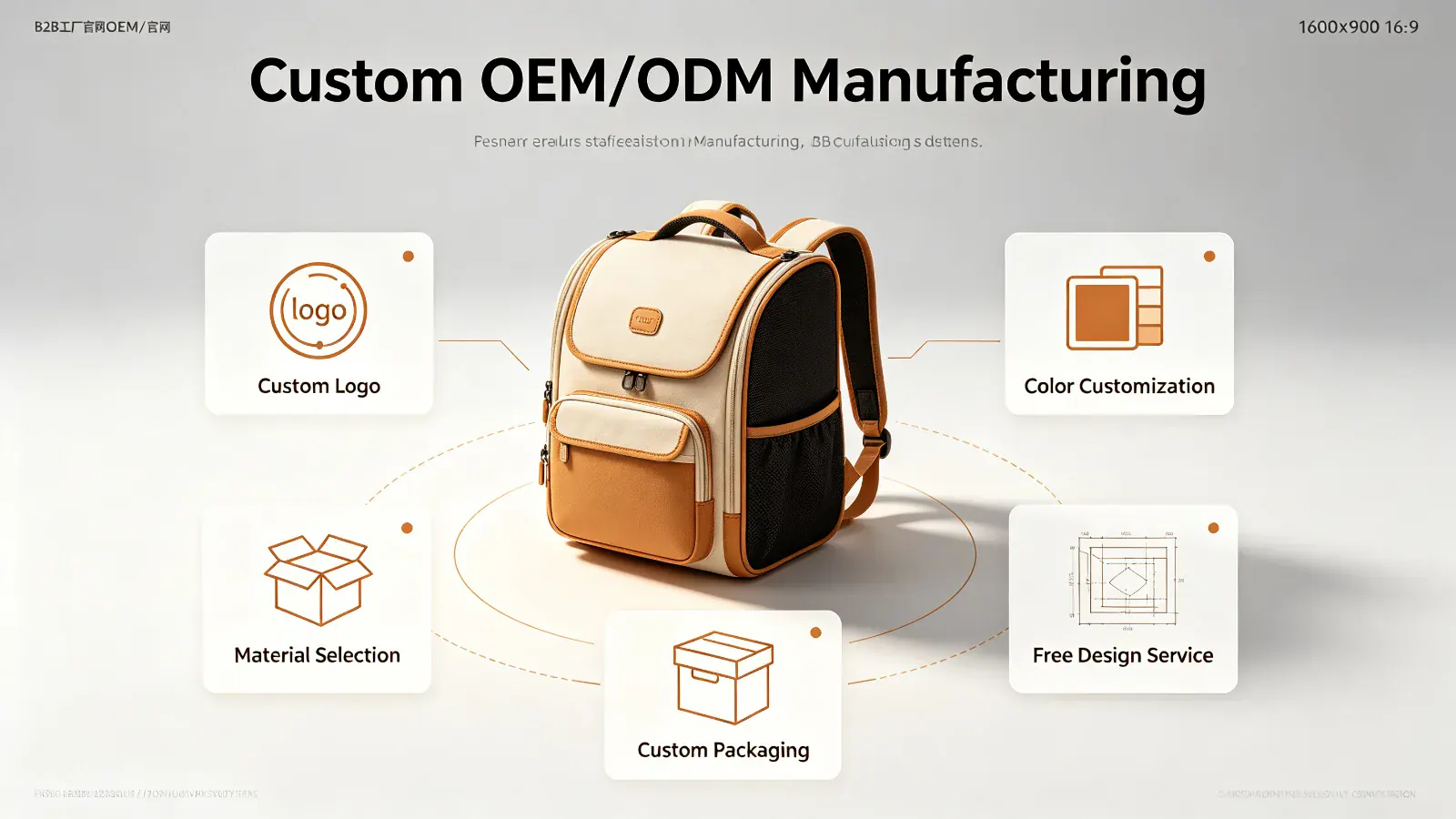
OEM vs ODM: The Simple Difference
OEM (Original Equipment Manufacturing) means the factory produces a product to your specification, usually based on an existing, proven design. In practice, this is private label: you take a model the factory already makes, customize the logo, colors, labels, and packaging, and sell it under your brand. The product’s core design belongs to the factory; the branding is yours.
ODM (Original Design Manufacturing) means the factory designs and develops a product from scratch — or from your concept — for you. The factory’s design team works from your sketch, reference photo, or rough idea to create a new product with custom structure, dimensions, materials, and branding. In full ODM, the design is developed specifically for your brand.
The short version: OEM = “make me this existing product with my branding.” ODM = “design and build a new product for my brand.”
When OEM Is the Right Choice
OEM is the smart default for most brands entering a market:
- You are testing a new category. You want a proven product on the shelf quickly without development risk.
- You have limited design resources. The factory has already solved the hard problems — structure, seams, zippers, fit.
- You want a faster, cheaper start. No design fees, shorter sampling, faster to market.
- You care about predictable quality. A base model that has been produced for years has known issues already fixed.
If you are a new Amazon seller or a small brand launching your first pet carrier line, OEM lets you validate demand with a smaller upfront investment.
When Full ODM Makes Sense
ODM is the right choice when the standard market is not enough:
- You have a genuinely different product idea that no existing model covers
- You need a unique design to protect against copycats — a distinctive shape or feature competitors cannot easily match
- You are positioning a premium product and need custom materials, hardware, and details
- You have your own design team or a clear concept and need manufacturing expertise to bring it to life
The trade-off: ODM takes longer (development, renders, samples, revisions), costs more upfront, and carries more risk. But it can produce a product with real competitive advantage and higher margins.
What to Expect From a Good OEM/ODM Partner
Whichever model you choose, a professional pet product factory should offer:
- A clear process — from inquiry and quoting, through sampling, approval, production, and delivery
- In-house design capability — 3D renders and technical drawings for ODM, plus honest advice on your concept
- Transparent pricing — a BOM-level quote so you know what you are paying for
- Refundable sample fees — a factory confident in your project will credit sample costs against the bulk order
- Quality control you can verify — documented QC stages and inspection standards
- Flexible MOQ — the ability to start small and scale
A Real-World Example: BATELI PET
To make the choice concrete, BATELI PET is a pet carrier and travel product manufacturer in Baigou, Hebei, China, operating for more than 20 years with a monthly capacity of over 80,000 pieces. It supports both models:
- OEM / private label: choose from a library of 120+ base models — soft carriers, space capsule backpacks, wheeled carriers, car seat carriers — and add your logo, colors, labels, and packaging. MOQ from 50 pieces.
- ODM / full custom: the in-house design team turns your sketch or reference into a production-ready product, with 3D renders and technical drawings for approval before sampling. Custom dimensions, structure, hardware, and branding are all supported, with patent-friendly design support.
Both routes share the same foundation: ISO 9001 and BSCI certification, CE / RoHS / REACH / CPSIA compliance, 7–15 day sampling, 30–45 day production, and 4-stage quality control ending in 100% final inspection. The right choice for you depends on where you are in your brand’s journey.
Which Should You Choose?
Ask yourself three questions:
- How original is my product idea? If it exists on the market, start with OEM.
- How fast do I need to launch? OEM is weeks faster.
- How much can I invest upfront? ODM costs more to develop.
Most brands do both over time: launch with OEM to build the brand and revenue, then move to ODM for signature products once they know their market. That combination — private label today, custom design tomorrow — is the most efficient path most pet brands can take.
Start Your Sourcing Journey
The fastest way to decide is to start the conversation. Tell BATELI PET your product idea, target price, and quantity, and the team will recommend whether OEM or ODM fits you best, with a detailed quotation within 24 hours. Request a Quote
Frequently Asked Questions
What is the difference between OEM and ODM?
OEM means you provide the design and the factory manufactures it to your spec; ODM means the factory provides its own design and you brand it as yours.
Which option is better for a new pet brand?
ODM is usually faster and lower risk for a new brand because you start from proven factory designs, while OEM gives you full design control.
What is the MOQ difference between OEM and ODM?
OEM orders start at 50 pcs per style; ODM custom designs start at 100 pcs per style.
How long does an ODM sample take?
ODM design samples take 10-15 days, compared with 3-5 days for logo-only samples and 7-10 days for material and color samples.