Short answer: Breathable carriers suit warm weather and long walks; solid carriers suit shy or anxious pets and travel. BATELI PET builds both as OEM from 50 pcs, using REACH/RoHS-compliant fabrics with 20+ years of experience.
One of the first questions every pet owner asks when choosing a carrier is whether to buy a breathable mesh carrier or a solid one. It is not a matter of one being better — they solve different problems. This guide breaks down the differences so you can choose the right carrier for your pet, your climate, and how you travel.
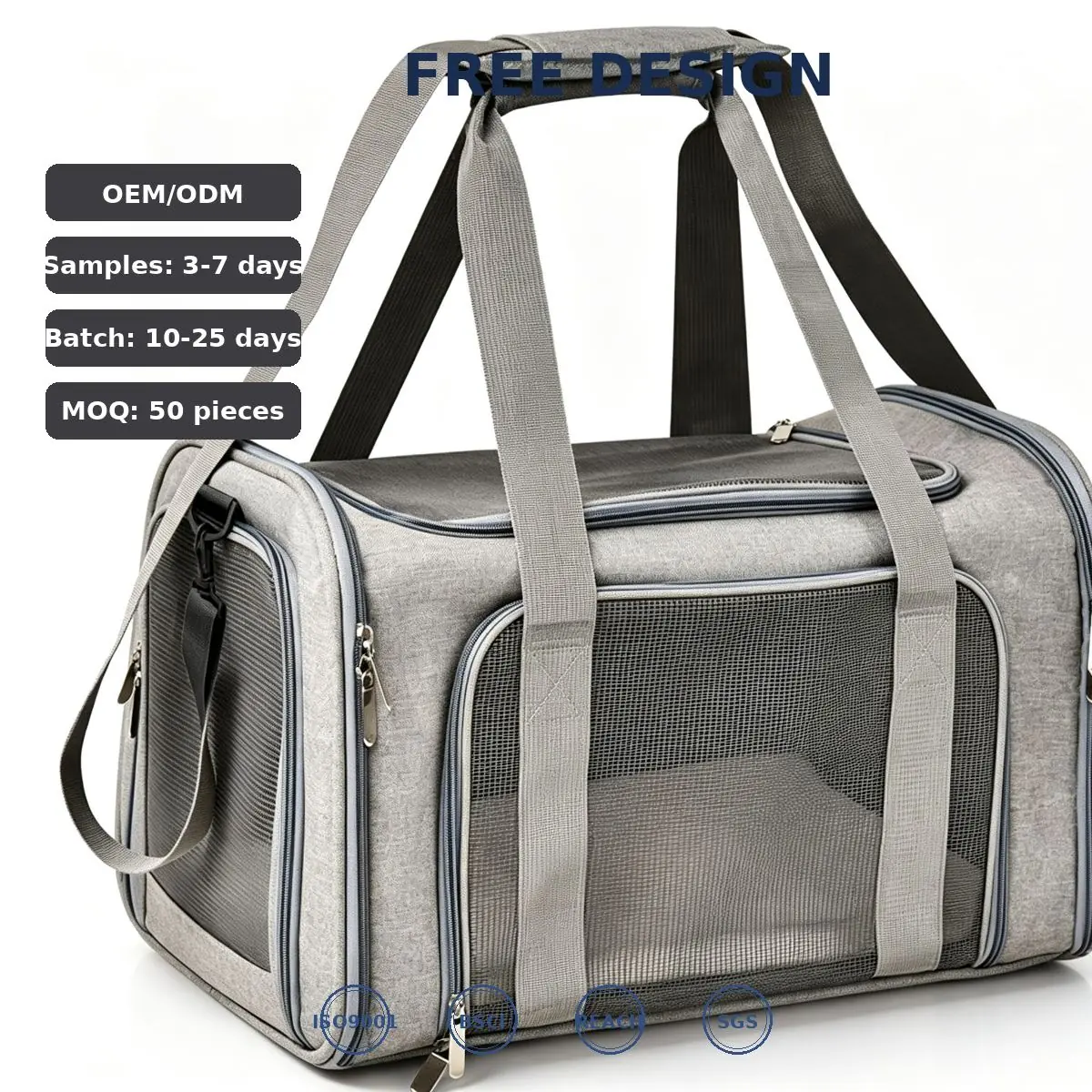
How Carriers Manage Airflow
A pet carrier’s main job is to keep your pet safe and comfortable in a confined space. Comfort depends heavily on airflow. Without ventilation, heat and humidity build up quickly, which is stressful and, in warm weather, genuinely dangerous for pets.
- Breathable (mesh) carriers use mesh panels over part or most of the walls, letting air circulate from multiple directions.
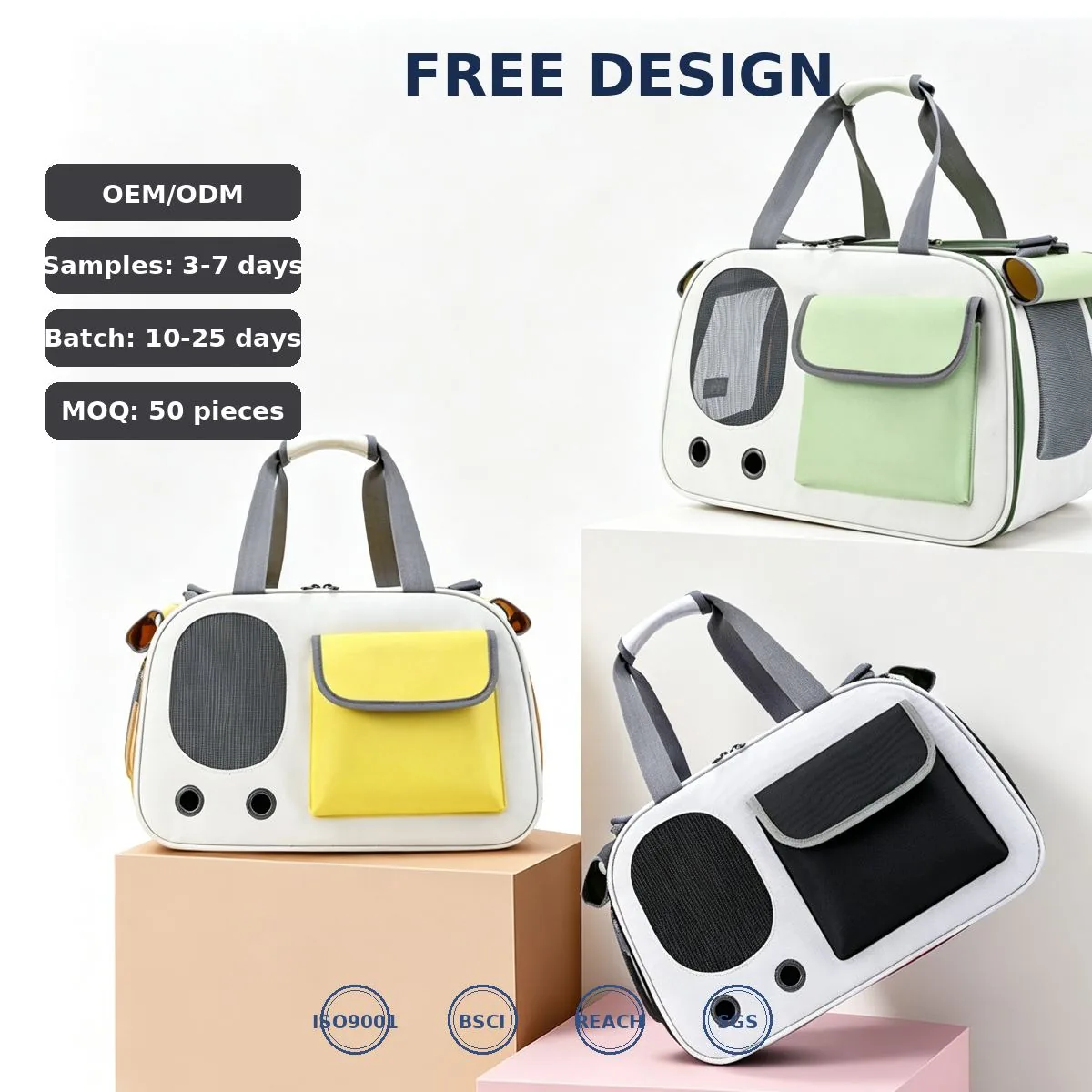
- Solid carriers use hard or padded walls with ventilation openings — usually windows, grilles, or vents — that allow air in but keep the structure rigid.
Both can be safe and comfortable; the right choice depends on your situation.
Breathable (Mesh) Carriers: Pros and Cons
Pros
- Better airflow — mesh walls move air constantly, keeping pets cooler in warm conditions
- Visibility — your pet can see out, which many animals find calming, and you can see them
- Lighter weight — soft mesh carriers are easier to carry and pack
- More flexible — soft sides can flex to fit under seats and into tight spaces, which is why they dominate airline cabin travel
- Easier to fold — many fold flat for storage
Cons
- Less protection — soft walls offer little protection from impact or other animals
- Less warmth — in cold conditions, heat escapes faster
- Less escape-proof — mesh must be high quality and well-stitched, or determined pets can push or chew through
- Less privacy — an anxious pet that wants to hide cannot
Solid Carriers: Pros and Cons
Pros
- More protection — rigid walls protect the pet from bumps, impacts, and other animals
- More security — harder for pets to escape or push against
- Better in cold weather — holds warmth longer
- More privacy — a covered or partially covered carrier helps anxious pets feel hidden
Cons
- Heavier and bulkier — harder to carry and store
- Less airflow — ventilation depends on windows and vents; quality varies widely
- Less flexible — rigid structure rarely fits under airline seats
- More expensive — generally cost more to make and buy
Which Is Right for Your Pet?
Consider three factors:
1. Climate. If you live in a warm climate or travel in summer, mesh carriers are the safer choice for airflow. In cold climates, solid carriers retain heat better — though you can always add a blanket to a mesh carrier in winter.
2. How you travel. For airline cabin travel, soft-sided mesh carriers are the practical standard because they fit under seats. For car travel and longer journeys where the pet is unattended, a more rigid carrier offers more protection.
3. Your pet’s temperament. A calm, social cat or dog often does well in an open mesh carrier with a view. A shy or anxious pet may feel safer in a carrier with more covered, solid areas where it can hide.
The Hybrid Approach: Mesh + Solid Panels
Many of the best carriers combine both: solid or padded walls for structure and security, with large mesh panels for airflow and visibility. Space capsule carriers are a popular example — a structured dome with a transparent window that gives the pet a view while keeping them contained. Hybrid designs let you match the carrier to the pet’s needs without sacrificing ventilation.
If you are choosing between the two extremes, a hybrid is often the safest first purchase because it works in more situations.
Quality Matters in Both
Whatever style you choose, the quality of construction is what actually determines safety:
- Mesh quality — fine, tightly woven mesh resists claws and teeth; cheap mesh fails fast
- Stitching — load-bearing seams should be reinforced, especially where handles and zippers attach
- Zippers — anti-escape zippers with secure pulls prevent panicked escapes
- Ventilation coverage — at least two sides should breathe, even in solid carriers
- Materials — should meet safety compliance for the pet market, such as CE, RoHS, REACH, and CPSIA for US-bound products
Choose Based on the Journey
There is no single right carrier — there is the right carrier for each pet and each trip. For hot weather, long flights, and social pets, choose breathable mesh. For cold weather, extra protection, and anxious pets, choose solid or hybrid designs. And in every case, buy quality: the seams, zippers, and mesh are what keep your pet safe.
If you are sourcing breathable and solid pet carriers for a retail business, BATELI PET manufactures the full range — breathable mesh carriers, soft-sided handled carriers, space capsule designs with transparent windows, and solid-structured options — all available for private label with your logo and packaging. The factory, based in Baigou, Hebei, China, has over 20 years of production experience, holds ISO 9001 and BSCI certification with CE / RoHS / REACH / CPSIA compliance, and starts wholesale orders from an MOQ of 50 pieces. contact our product team BATELI PET and our team will recommend the right mix for your market within 24 hours. Request a Quote
Frequently Asked Questions
Which is better: a breathable or a solid pet carrier?
Breathable mesh suits warm, active pets; more enclosed solid designs reduce stress for anxious pets. Stock both to cover customer needs.
Can I mix breathable and solid designs in one order?
Yes. We offer both types on the same OEM base, MOQ from 50 pcs per colour/style, with samples in 7-15 days.
How do you ensure ventilation without weakening the bag?
We reinforce mesh at stress points and use durable 600D-1680D fabric around openings for a safe balance.
Are your fabrics safe for sensitive pets?
All materials meet REACH and RoHS standards. Our factory is BSCI, SGS and ISO 9001 certified.