Short answer: For airline travel, hard-sided carriers protect fragile items and hold structure under the seat, but soft-sided carriers are lighter, more flexible and easier to fit into tight cabin gaps. BATELI PET manufactures both types with MOQ from 50 pcs (OEM), 30-45 day production and BSCI, SGS, ISO 9001, REACH and RoHS certified materials.
\n\n
\n\n
Choosing between a hard-sided and soft-sided pet carrier is one of the most common decisions brands face when sourcing for the airline-travel segment. Both can be cabin-approved, but they solve different problems. If you are an importer, Amazon seller or ODM brand building a travel line, the choice affects your material cost, packaging dimensions, return rate and the reviews your listing receives. This guide compares the two across structure, weight, airline rules, cost and customization, so you can pick the right base product before you commit to a 50-piece order.
\n\n
What Is the Real Difference Between Hard-Sided and Soft-Sided Carriers?
\n
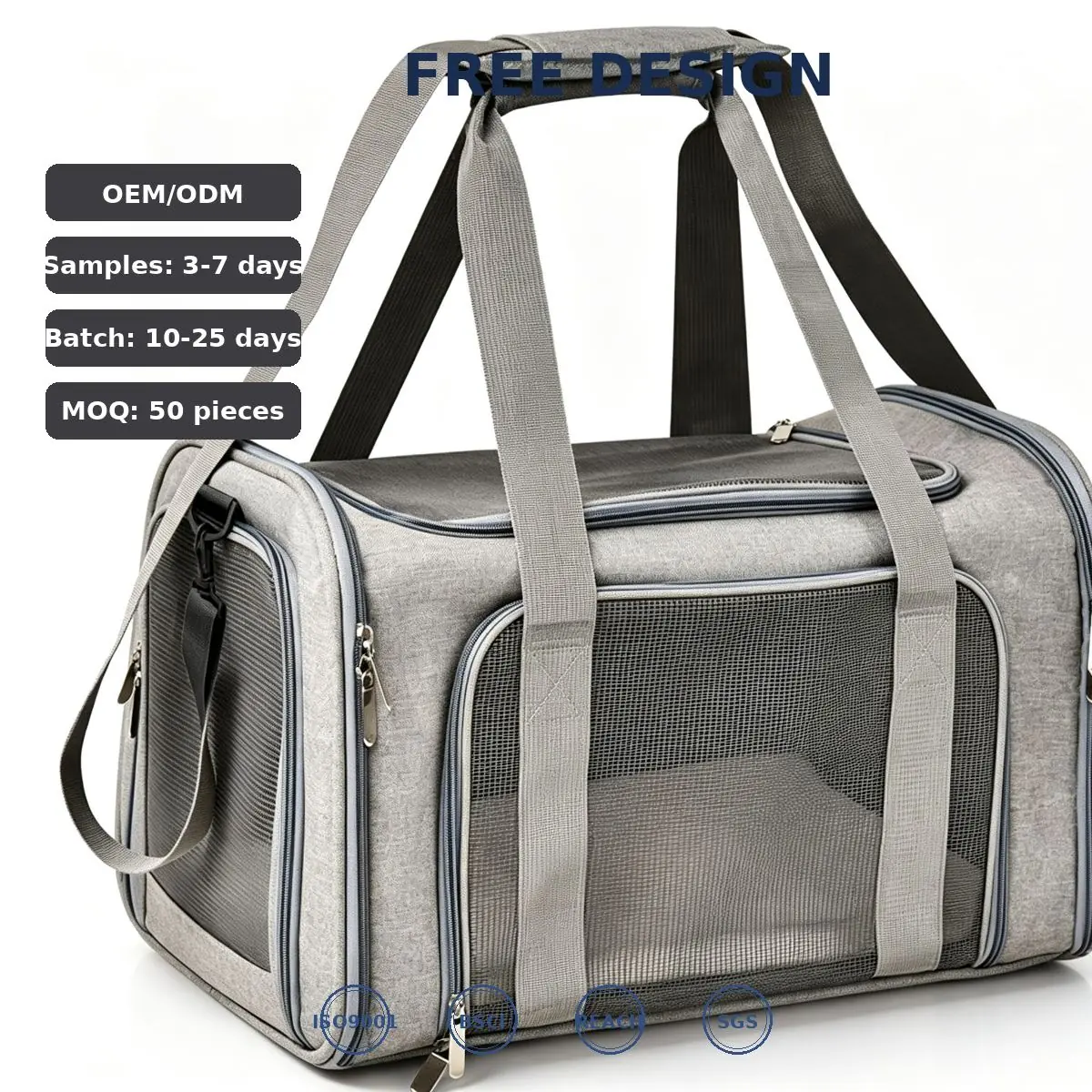
A hard-sided carrier is built around a rigid shell, usually ABS, PP or fiberglass-reinforced plastic, with a hard base and fixed opening. It keeps its shape whether or not there is a pet inside. A soft-sided carrier uses a fabric shell (600D-1680D polyester, often with EVA inserts) over a wire or plastic frame. It can compress, fold and flex. The hard type protects against impact and chewing; the soft type prioritizes weight and packability. Neither is universally better, and many successful brands offer both in the same lineup to cover different routes.
\n\n
Which Type Fits Better Under an Airplane Seat?
\n
This is the question buyers care about most. Under-seat dimensions vary by airline and by aircraft, so the real test is flexibility. Soft-sided carriers compress slightly at the edges, which helps when a carrier is 1-2 cm over the published limit. Hard-sided carriers cannot compress, so if the shell is too tall it simply will not slide under the seat. However, on regional jets where the under-seat clearance is deep and narrow, a rigid shell keeps the carrier from sagging onto your feet. Check the IATA guidance and each airline’s measured size before you finalize a mold. You can compare the details in our guide to airline-approved pet carrier sizes and safety.
\n\n
How Does Weight Compare Between the Two Types?
\n
Weight matters because it adds to the carrier’s empty weight, which the pet must effectively carry. A soft-sided cabin carrier typically weighs around 0.8-1.5 kg empty. A hard-sided equivalent starts near 1.8-2.5 kg because of the shell. On a budget airline that charges by carry-on weight, a 1 kg difference can be the deciding factor for repeat customers. For backpack and shoulder models, keep the empty weight under 2.5 kg so the unit stays comfortable. Our pet carrier materials guide explains how fabric weight and EVA inserts trade off against durability.
\n\n
| Factor | Hard-Sided | Soft-Sided |
|---|---|---|
| Empty weight | Heavier (1.8-2.5 kg) | Lighter (0.8-1.5 kg) |
| Under-seat fit | Rigid, no flex | Compresses, forgiving |
| Impact protection | Strong | Limited |
| Packability | Bulky | Folds flat |
| Cleaning | Wipe shell | Hand-wash or remove pad |
| Best route | Chewers, long layovers, cargo-style | Cabin, small pets, frequent flyers |
\n\n
Why Do Airline Rules Favor One Structure Over the Other?
\n
Airlines do not ban either type, but they enforce ventilation, leak-proofing and under-seat fit. Hard-sided carriers need mesh ventilation panels cut into the shell and a secure door latch; soft-sided carriers need a rigid base so the pet is not sagging under their own weight. Both must hold the pet without escape. The compliance bar is set by IATA for cabin carriage, and importers selling into the EU also need REACH and RoHS-compliant materials. You can read the full breakdown in our IATA airline pet travel regulations 2026 guide and on our certifications page.
\n\n
How Does Cost and MOQ Differ for Importers?
\n
Soft-sided carriers are usually cheaper to tool and produce because the main cost is fabric cutting, sewing and hardware. Hard-sided carriers need shell molding, which raises the tooling cost and the sample timeline. For an importer starting a brand, a soft-sided line is the lower-risk entry: MOQ from 50 pcs for OEM, 3-5 day logo samples, and 30-45 day mass production. Hard-sided ODM designs, which need a new mold, typically need a higher quantity and a 10-15 day ODM design sample. Our factory runs 18 production lines at 2,600 m² with 80,000+ units monthly capacity and exports to 50+ countries.
\n\n
Which Should You Choose for Your Product Line?
\n
Use this short checklist when you finalize the decision for your brand:
\n
- \n
- If your target customer flies with a small cat or dog in the cabin, start with soft-sided for lighter weight and easy under-seat fit.
- If the pet is a strong chewer or you sell long-haul and layover routes, add a hard-sided shell model as a premium tier.
- Keep the same brand hardware, zipper pulls and color palette across both so customers recognize the collection on your listing.
- Validate with a 50-piece OEM logo sample before committing to a rigid mold, which carries higher tooling cost.
\n
\n
\n
\n
\n
Choose soft-sided if your customer flies small cats and dogs in the cabin, ships via Amazon FBA, and wants lightweight, foldable inventory. Choose hard-sided if your customer has a chewer, travels long routes, or needs a premium rigid look. Most winning assortments list a soft-sided cabin bag as the hero SKU and a hard-sided or hybrid option as a higher-price tier. For OEM or ODM development, start with a soft-sided sample to validate demand, then add a rigid model once sales data justifies the mold. Explore options on our custom manufacturing page.
\n\n
Frequently asked questions
\n
Is a hard-sided carrier safer than a soft-sided one for flying?
\n
Both are safe when they meet cabin size and ventilation rules. Hard-sided offers better impact protection; soft-sided is easier to fit under the seat. Choose by route and pet, not by a universal safety rule.
\n
\n
What is the MOQ for custom hard- or soft-sided carriers?
\n
MOQ starts at 50 pcs for OEM logo customization and 100 pcs for ODM design, for both structure types.
\n
\n
How long does sampling take?
\n
7-15 days: 3-5 days for a logo sample, 7-10 days for a material sample, and 10-15 days for an ODM design sample (required for a new hard-sided mold).
\n
\n
Do both types meet airline and material compliance?
\n
Yes. Both are built to IATA cabin guidance and use BSCI, SGS, ISO 9001 certified factory production with REACH and RoHS compliant materials.
\n
\n
How long is mass production?
\n
30-45 days after sample approval, supported by 18 production lines and 80,000+ units per month capacity.
\n
\n\n
Ready to build your own hard- or soft-sided airline carrier line? Request a Quote or Get a Free Sample. WhatsApp: +86 133 8657 5871 | Email: pet@batelipet.com
\n\n\n\n\n