Short answer: Auditing a pet carrier factory before ordering is the most important step to avoid quality disasters. BATELI PET is a 20+-year BSCI-audited factory in Baigou, China, with 2,600m² facility, 18 production lines, 80,000+ monthly capacity, and SGS/ISO 9001/REACH/RoHS certifications. This 25-point checklist covers factory credentials, production capability, quality control, design customization, and logistics—use it to audit BATELI PET or any supplier before you commit. MOQ from 50 units, sampling 7-15 days, export to 50+ countries.
Whether you’re a brand importer, Amazon seller, or retail chain, this checklist gives you a structured framework to verify any pet carrier supplier — before you wire a deposit.
What Is a Pet Carrier Factory Audit and Why Does It Matter?
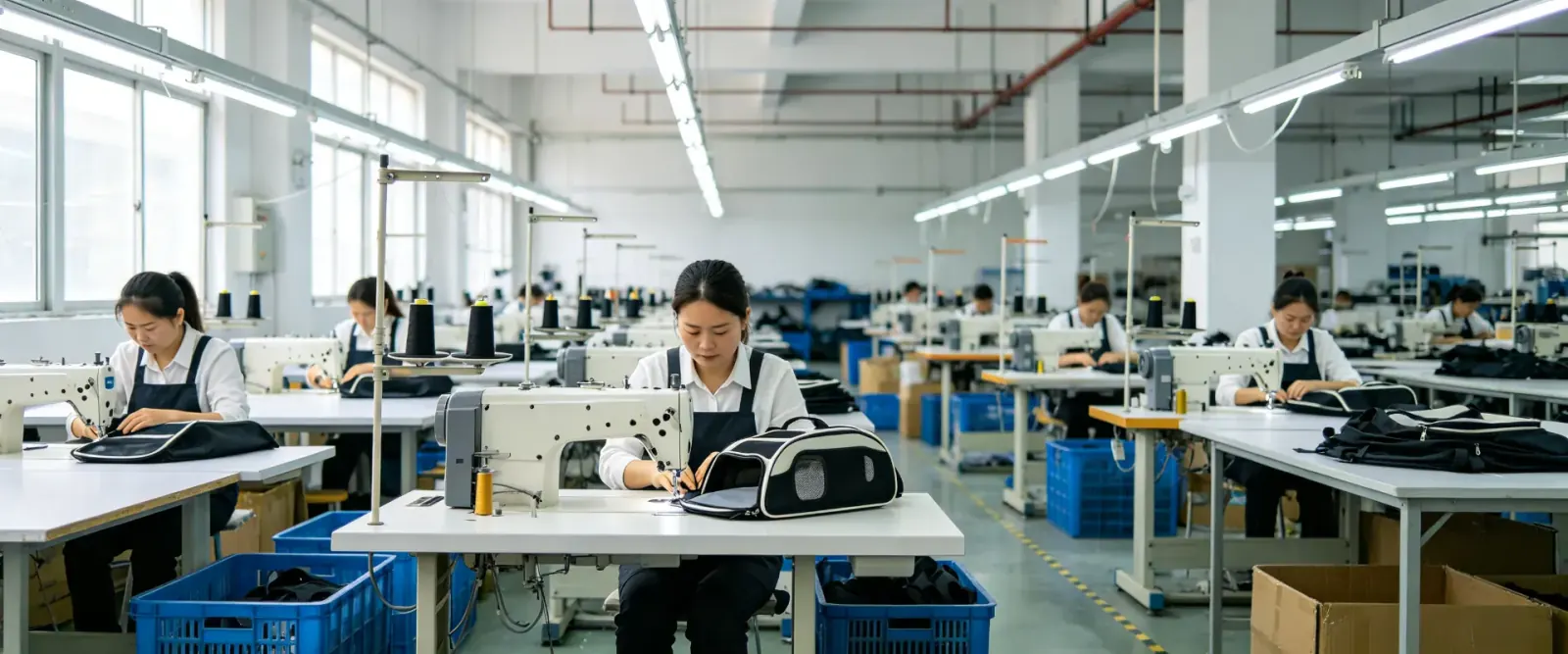
A factory audit is a systematic verification of a supplier’s credentials, capabilities, quality systems, and compliance status. For pet carriers — which must meet airline rules, material safety standards, and durability expectations — an audit catches problems that samples alone can’t reveal.
Consider the costs of skipping it: a 2024 industry survey found that 34% of pet product importers experienced quality rejects due to unverified factories, with average losses of $12,000 per incident. A proper audit takes 2–4 hours of desk research plus one factory visit, and it can save you from receiving 5,000 units of non-compliant merchandise.
At BATELI PET, we welcome audits because our 2,600 m² factory, 180+ workers, and 80,000+ monthly unit capacity are built on transparency. Here’s the exact checklist we recommend.
Group 1: What Factory Credentials & Compliance Should You Check? (5 Points)
- Business license & export history — Verify the factory holds a valid business license and can show export records for 5+ years. A factory that only registered last year may lack institutional knowledge.
- BSCI certification — The Business Social Compliance Initiative audit confirms ethical labor practices, fair wages, and safe working conditions. Request the latest BSCI report and rating (A/B/C/D).
- ISO 9001 quality management — ISO 9001 certification indicates documented quality processes. Verify the certificate is current and covers pet product manufacturing specifically.
- SGS or third-party test reports — Ask for SGS, TÜV, or Intertek test reports covering material safety (REACH, RoHS), zipper strength, and load capacity. Reports older than 12 months should be refreshed.
- REACH & RoHS compliance for EU markets — If selling into the EU, confirm the factory tests for REACH SVHC substances and RoHS restricted materials in fabrics, buckles, and mesh components.
Group 2: How Do You Verify Production Capability & Capacity? (5 Points)
- Monthly production capacity — Ask for the maximum monthly output in units. A credible pet carrier factory should produce 30K–100K+ units/month. BATELI PET produces 80,000+ units monthly across 8 production lines.
- Factory floor size & equipment — Request photos or a video tour of the cutting, sewing, assembly, and packing areas. Look for automated cutting machines, dedicated QC stations, and organized material storage.
- Worker count & turnover — A factory with 150+ workers and low turnover (<15% annually) indicates stable operations. High turnover correlates with inconsistent sewing quality.
- Material sourcing & inventory — Verify the factory has established relationships with fabric mills and hardware suppliers. Ask about lead times for 600D polyester, mesh, and EVA foam — critical materials should be in stock or available within 7 days.
- Sample-making capability — A dedicated sample team with 7–15 day turnaround is essential. Factories that outsource sampling often struggle with consistent production quality later.
Group 3: What Quality Control & Testing Should You Audit? (5 Points)
- Incoming material inspection (IQC) — Confirm the factory inspects every fabric roll and hardware batch before production. Ask for the AQL (Acceptable Quality Level) standard — AQL 2.5 is industry standard for pet carriers.
- In-process quality checks (IPQC) — Look for QC checkpoints at cutting, sewing, and assembly stages. Each checkpoint should have documented inspection criteria and sign-off sheets.
- Finished goods inspection (FQC/OQC) — Before packing, every batch should undergo a final inspection covering stitching, zipper function, strap strength, and dimensional accuracy. Request the defect rate — below 2% is acceptable.
- Load & stress testing — Pet carriers must handle 5–15 kg pets. Ask for test data on strap pull strength (target: ≥50 kg), zipper cycle life (target: ≥5,000 cycles), and seam burst strength.
- Traceability & batch records — The factory should maintain batch records linking each production lot to material suppliers, QC results, and shipping dates. This is critical for recalls and compliance audits.
Group 4: How Do You Evaluate Product Design & Customization? (5 Points)
- OEM/ODM design capability — Verify the factory has an in-house design team that can create custom patterns, modify dimensions, and develop new styles. Learn more about our OEM/ODM process.
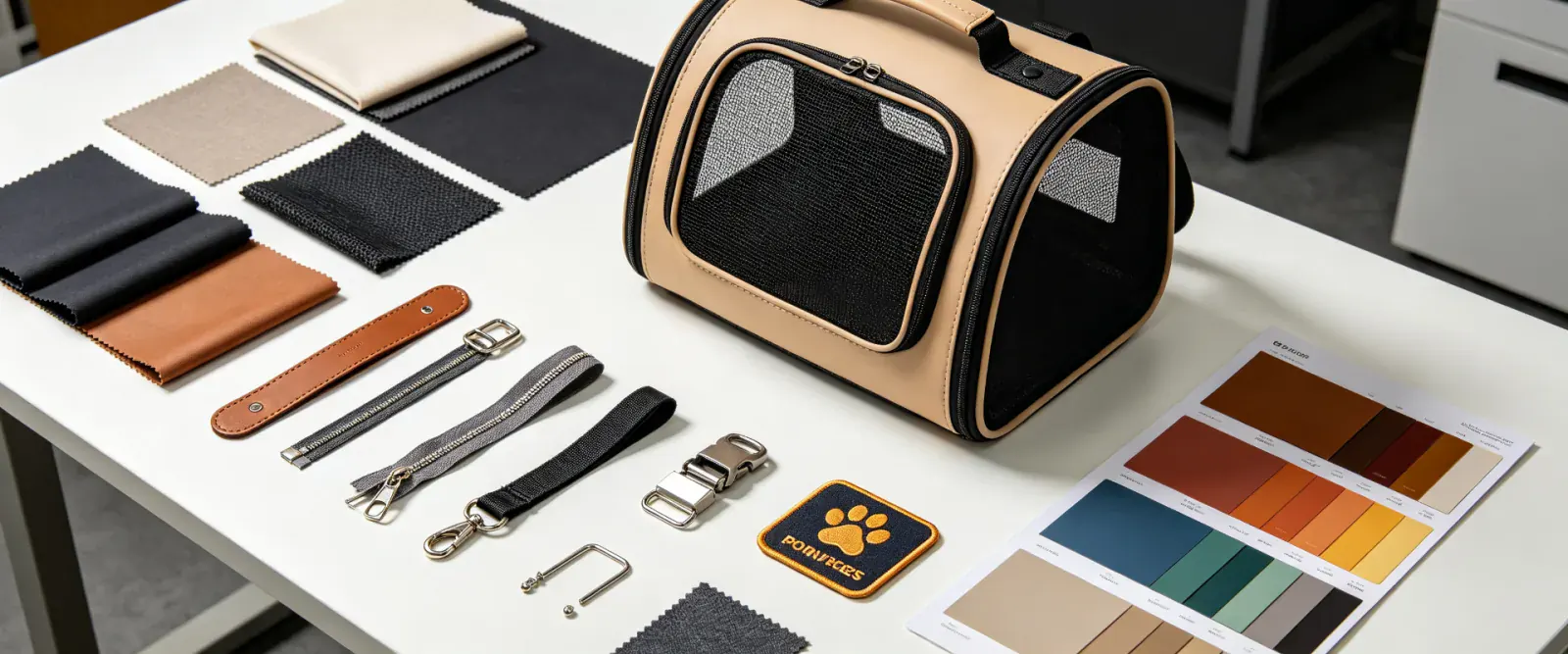
- Custom logo & branding options — Confirm available branding methods: woven label, rubber patch, heat transfer, embroidery, or full-color printing. Minimums and setup fees vary by method.
- Material & color customization — A flexible factory offers Pantone-matched fabrics, custom mesh colors, and hardware finishes (black nickel, gunmetal, matte). Ask for a material swatch card before ordering.
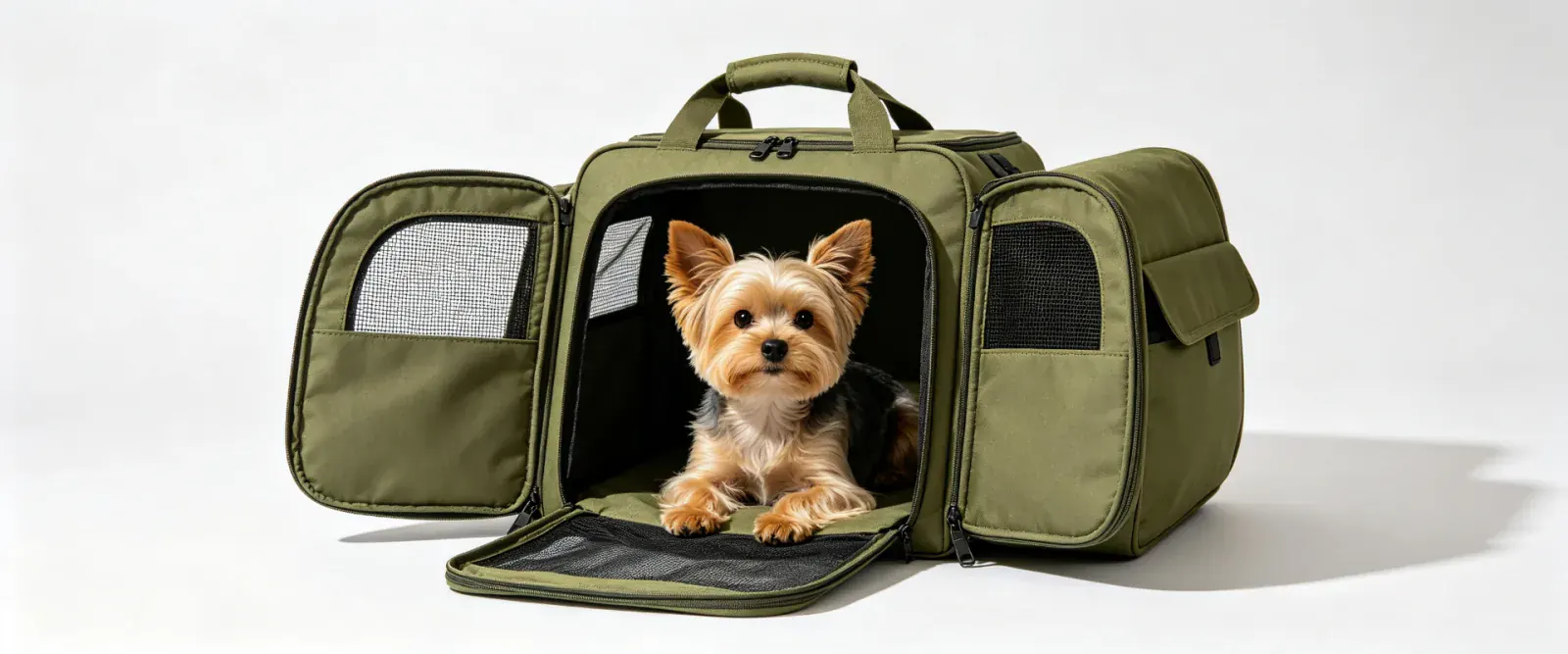
- SKU range & category depth — Review the factory’s existing product catalog. A strong pet carrier supplier offers 500+ SKUs across backpacks, rolling carriers, expandable models, and airline-approved styles. Browse our product catalog.
- Packaging customization — Confirm the factory can provide custom hang tags, poly bags, color boxes, or retail-ready packaging. For Amazon FBA, ask about polybag warning labels and FNSKU labeling support.
Group 5: How Do You Assess Logistics, Pricing & Communication? (5 Points)
- MOQ & pricing transparency — A reasonable MOQ for custom pet carriers is 50 pcs per style/color. Pricing should be itemized: unit cost, sample fee (often refundable), mold/setup fee, and shipping. Avoid factories that refuse to break down costs.
- Lead time reliability — Standard bulk production is 30–45 days after sample approval. Ask for the on-time delivery rate from the past 6 months — above 90% is healthy.
- Shipping & Incoterms — Confirm the factory can ship FOB, CIF, or DDP. For US importers, FOB Shenzhen/Shanghai is standard. Ask about experience with Amazon FBA direct shipping and customs documentation.
- Communication responsiveness — Test response times: a reliable factory replies within 12–24 hours in English. Dedicated account managers, WhatsApp support, and video call availability are positive signals.
- After-sales & warranty — Ask about the defect replacement policy, return handling, and warranty period (typically 1 year for manufacturing defects). A factory that stands behind its product will offer clear after-sales terms.
How Do You Use This Checklist in a Step-by-Step Audit?
Step 1 — Desk audit (Day 1): Request all documentation (licenses, certifications, test reports, factory photos) and verify against Groups 1–2. This eliminates 60% of unsuitable suppliers without travel.
Step 2 — Sample evaluation (Days 7–15): Order 2–3 samples and test them against Group 3 quality criteria. Check stitching, zippers, materials, and dimensions against your specifications.
Step 3 — Factory visit (optional but recommended): If placing an order above $10,000, visit the factory or hire a third-party auditor (SGS, Bureau Veritas) to conduct an on-site audit covering all 25 points.
Step 4 — Pilot order: Start with a reduced quantity (100–300 pcs) to validate production consistency before committing to full volume.
Step 5 — Ongoing monitoring: For repeat orders, conduct annual re-audits and request pre-shipment inspection (PSI) reports for every container.
For more context on our factory capabilities, read about BATELI PET’s 20+ year history and our commitment to transparent manufacturing.
Frequently Asked Questions
How much does a third-party pet carrier factory audit cost?
A basic desk audit is free if you do it yourself. Third-party on-site audits by SGS or TÜV typically cost $300–$800 per day, with most pet carrier factory audits completed in 1 day. Some suppliers reimburse audit fees for orders above a certain threshold.
Can I audit a factory remotely without visiting China?
Yes. A remote audit combines document verification (licenses, certifications, test reports), live video factory tours via WhatsApp or WeChat, and sample testing. For orders under $5,000, a remote audit plus sample evaluation is often sufficient. For larger orders, consider a third-party on-site audit.
What’s the most common red flag in a pet carrier factory audit?
The #1 red flag is a factory that cannot provide valid, current test reports for material safety (REACH/RoHS). This often indicates they’re using untested materials that could fail customs inspections or harm pets. Other red flags include high worker turnover, no dedicated QC team, and refusal to share factory floor photos.
How long does a full factory audit take?
A desk audit takes 2–4 hours. A sample evaluation takes 7–15 days (shipping time). An on-site third-party audit takes 1 day at the factory plus 3–5 days for the report. Plan for 2–3 weeks total from initial contact to audit completion.
Ready to Audit BATELI PET?
We’re a BSCI-audited, ISO 9001-certified pet carrier factory with 20+ years of experience, 500+ SKUs, and exports to 50+ countries. MOQ from 50 pcs, samples in 7–15 days, bulk production in 30–45 days.
Request a Quote or WhatsApp us at +86 133 8657 5871 | Email: pet@batelipet.com